
“What has been will be again, what has been done will be done again; there is nothing new under the sun.“ – Solomon (970 – 931 BCE)(Ecclesiastes 1:9). This old saying is still true to what is happening in Ghana.
For years, successive governments in Ghana have resorted to State-led economic control in the form of policies, programs, and interventions to address poverty, unemployment, and general hardship. While there have been some gains in temporary relief, the long-term compounding effects of unemployment, hardship, and misery point to a deeper structural problem and systemic gap that needs fixing.
In a traditional sense, prosperity stems from markets and the interplay of voluntary economic actors and institutions. It is widely accepted that free trade fosters prosperity and creates an enabling entrepreneurial environment, creates jobs, attracts investments, and helps an economy grow.
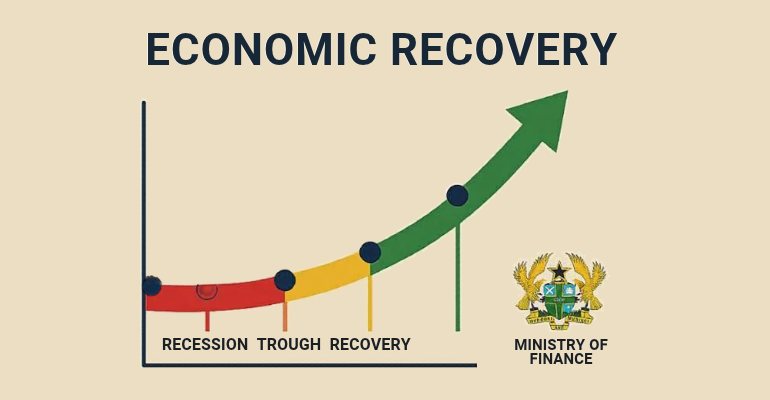
In an attempt to achieve such outcomes, the Government of Ghana is set to unveil a new economic programme, dubbed “The New Economy,” in the 2027 Budget as part of efforts to move Ghana beyond economic stabilisation toward long-term growth and prosperity. But this is not based on free market or free trade. According to the current Minister of Finance, Cassiel Ato Forson, “the initiative will focus on transforming Ghana’s economy through sustainable job creation, increased productivity, economic resilience, and inclusive growth”
How different will this be from post-independence interventions by central governments and, most recently, the erstwhile administration? It will be recalled that the former Minister of Finance, Ken Ofori-Atta, unveiled an ambitious government plan to create one million jobs as part of a purported grand scheme to respond aggressively and efficiently to the country’s persistent youth unemployment during the 2021 Mid-year budget presentation.
While one is tempted to argue and justify reasons that might determine the success of the “New Economy” and the failure of initiatives such as “Obaatanpa”, Ghana’s unemployment rate currently stands at 13.0% and multidimensional poverty at around 21.9%, according to the Ghana Statistical Service.
As opined by Thomas King in his book “The Inconvenient Indian: A Curious Account of native People in North America”, “For an individual, one of the definitions of insanity is doing the same thing over and over again in the same way and expecting different results. For a government, such behaviour is called…policy.”
Optimistically, the Finance Minister and the Mahama-led Administration have shown considerable gains by doing things differently. First, through its macroeconomic management by reducing deficits, public debt, reducing inflation, and maintaining a relatively stable currency, which makes long-term business planning relatively easier.
Its approach to microeconomics is an important step. However, it will achieve better outcomes if it allows businesses to thrive with ease, tackles informality, removes duplicates of licensing and business certificates, eliminates bureaucracy in public service delivery, removes price controls, eliminates trade restrictions, and strengthens market institutions to protect property rights, enforce contracts, competition, and accountability.
Between the good intentions of the Ghanaian Government and the anticipated outcome exist structural gaps that need fixing. It is only through economic freedom that a new economy can lead to economic prosperity, job creation, and an inclusive economy.
Put better by the American billionaire businessman, industrialist, and philanthropist Charles G. Koch, “I studied what principles underlaid peace and prosperity and concluded the only way to achieve societal well-being was through a system of economic freedom.
To make “The New Economy” impactful, it should be built on free markets and free trade